The first ever example of patent pools took place in 1903, when the Wright Brother's developed the very first flying machine. Ecstatic with there success, they immediately patented the invention and persecuted any party that infringed on their turf. There were other parties who maintained interest in the craft of flight however, and the US government eventually interviewed and forced the patent holders to share there patents with the rest of the industry, eventually kicking off the aviation industry that we know today. Without such action by the part of the government, we can never know what might have come of the airplane without the thousands of minds working on it in unions. The flight patent pool is one of most basic textbook examples of patent pools in history.
However there now exists another such example in recent years, one not as beneficial to social welfare. While many people criticized the patent pools regarding airplane manufacturing, there is a undeniable truth of the benefits it provided to society, despite the lost profits to the Wright brothers. Until recently, antiviral drugs used to treat diseases such as HIV cost nearly $12K per person per year, meaning only the most elite and wealthy could afford them. however less developed countries like India did no recognize such patents, and as such began producing their own cheap knockoffs. Eventually the cost fell to almost $350 per person, making the drug available to a much larger population. However in 1995 the Wold Trade Organization instilled a 20 year minimum patent recognition for new medication upon all countries, skyrocketing both the number of patents and cost of drugs.
Personally, I am not sure I am well versed enough in the field to make a judgment call on whether patent pools are good or bad. While the use of patent pools do help expand a industry and speed up the advancement of technological inventions, they do result in a loss of incentives and rewards for the inventor.
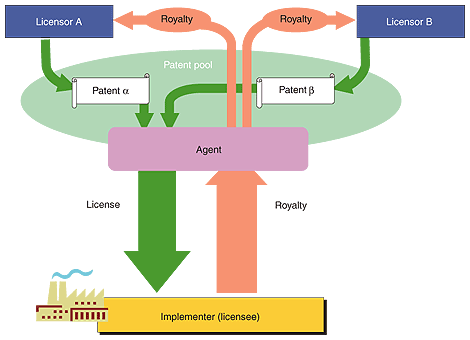
However there now exists another such example in recent years, one not as beneficial to social welfare. While many people criticized the patent pools regarding airplane manufacturing, there is a undeniable truth of the benefits it provided to society, despite the lost profits to the Wright brothers. Until recently, antiviral drugs used to treat diseases such as HIV cost nearly $12K per person per year, meaning only the most elite and wealthy could afford them. however less developed countries like India did no recognize such patents, and as such began producing their own cheap knockoffs. Eventually the cost fell to almost $350 per person, making the drug available to a much larger population. However in 1995 the Wold Trade Organization instilled a 20 year minimum patent recognition for new medication upon all countries, skyrocketing both the number of patents and cost of drugs.
Personally, I am not sure I am well versed enough in the field to make a judgment call on whether patent pools are good or bad. While the use of patent pools do help expand a industry and speed up the advancement of technological inventions, they do result in a loss of incentives and rewards for the inventor.

No comments:
Post a Comment